A winding sculpture that puts visitors in perpetual motion
As a continuous movement through the landscape, Serpentine unfolds — rising and descending in a spiral with no clear beginning or end. The work is both sculpture and architecture, a form not only to be observed but experienced from within. Through stairs and ramps, the visitor is guided in an unbroken sequence where up becomes down and down turns upward again. The movement continues, turn after turn, evoking a sense of infinity.
Serpentine is situated in the borderland between architecture and sculpture. Here, movement becomes form, and form becomes space. By following the spiral, visitors experience not only the work, but also themselves in the landscape – their bodies in motion, their changing gaze, their place in time.
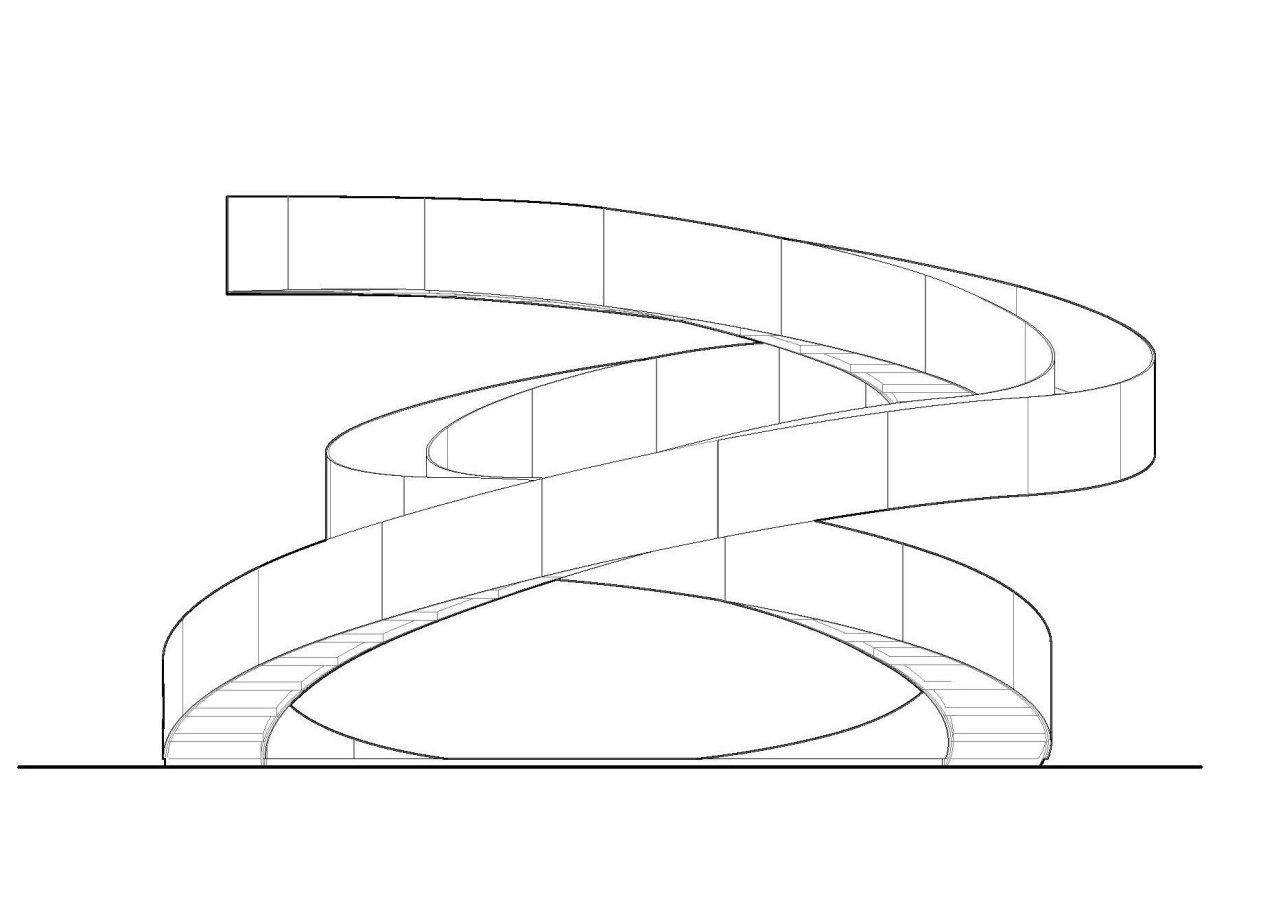
Located on a hillside in the Skåne countryside, in the south of Sweden, the sculpture arouses curiosity upon first sight. The red spiral stands out against the green landscape, a clear, striking contrast that catches the eye and invites you to come closer. The continuous movement reminds us of how we are constantly on the move, in space and through time.
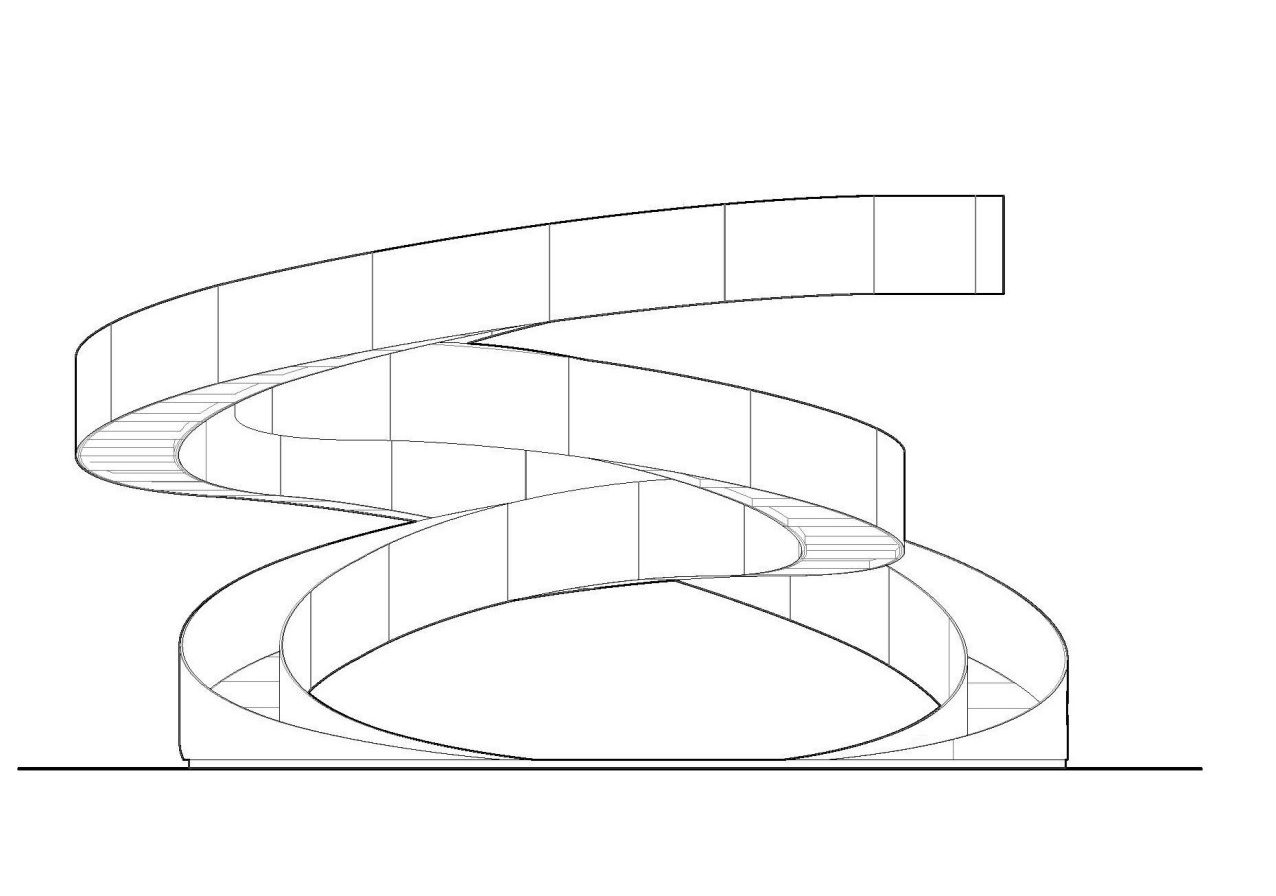
The slope of the spiral shifts between ramp and staircase. Sometimes you climb steeply, sometimes without any effort. As you move through the sculpture, the view changes and you see the landscape from new angles, discovering views you wouldn’t have from the ground. Movement controls the pace, and pace controls the experience. From the highest point of the spiral, the landscape opens up to you – seen from above, through this sculpture. It is a physical journey, but also an inner one.
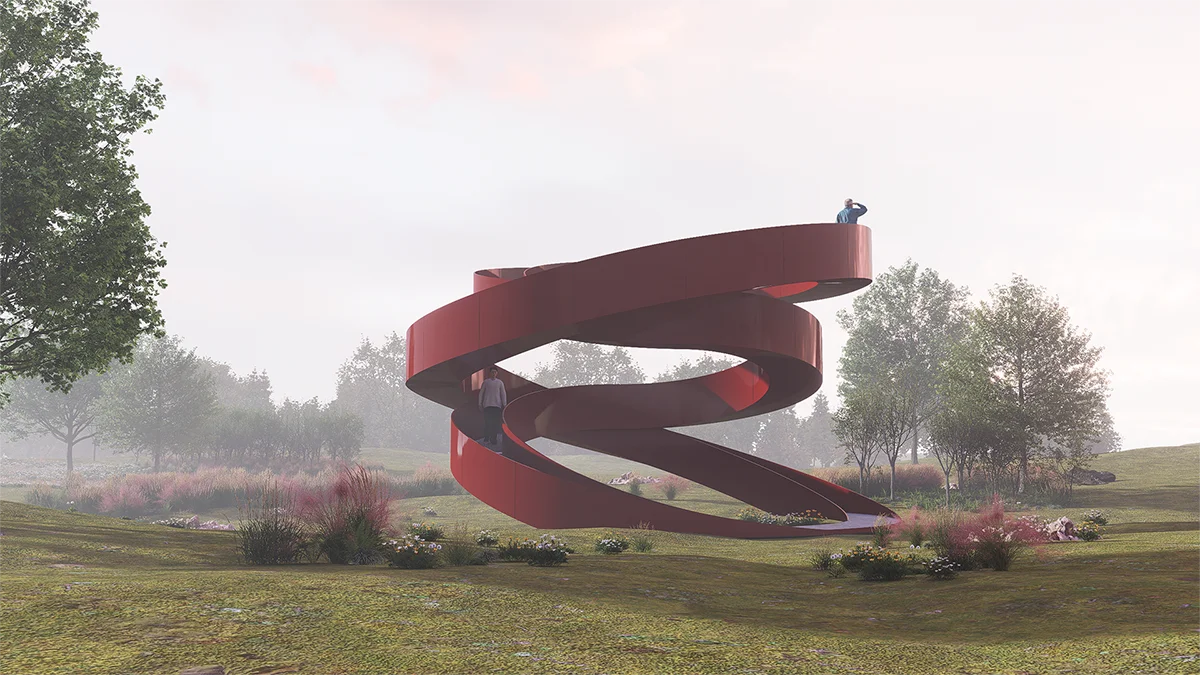
Serpentine stages infinity. The movement of the spiral becomes a symbol of the passage of time – without a clear beginning and without an end. It is a work that can be viewed and walked on. It is a room, a path, a condensed moment in time. Serpentine is both movement and rest, both moment and eternity. A work to relate to – with the eyes, with the body and with the senses.


